Light the Space, Not the Face
The most honest thing you can say about a lot of commercial location shoots is that the location is all but irrelevant.
The crew builds the lighting package, positions the subject inside it, and the room becomes backdrop. An arrangement of colors and textures to manage around the actual setup. Whether the space was a hotel conference room, a warehouse loft, or a dense forest barely matters. The lighting would have been the same either way.
When photographers and DPs walk into a location that's really working, we know it before we even set down a case. The window angle, the quality of ambient, the way the practicals tie the room together and to each other. The room is already doing part of the job for us.
Famed designer Virgil Abloh made this argument with a candle.
He'd hold one up — dented tin, kind of beat up — and ask where it belongs.
Put it in a white gallery: it's art.
Leave it in the garage: someone throws it away.
His conclusion was that the energy should go into designing the room, not refining what's inside it. "I could design around the candle," he said, "or I can design the room that it sits in."
For a working photographer or DP, that requires almost no translation. The room is literal. What I do with it (or don't) shows up in the work. And it describes something considerably larger than lighting, though that’s probably the most direct place to start.
Light the Room
The working model in many sectors of commercial photography runs roughly like this: identify where you want your subject, set up your lighting to work for them at that position, make adjustments, lock it in. It's controllable, repeatable, and produces results clients can read simply. No shade to headshot photographers out there, but when there’s a system that can be reproduced and franchised the world over, that combination is exactly why it becomes a difficult habit to avoid once it settles in.
The alternative starts with the room.
What quality of light does this space want?
Where does daylight normally come from?
What practicals are present, and
What's the existing logic of the place before we’ve added anything?
And then the tactical question:
What does it take to amplify that logic rather than override it?
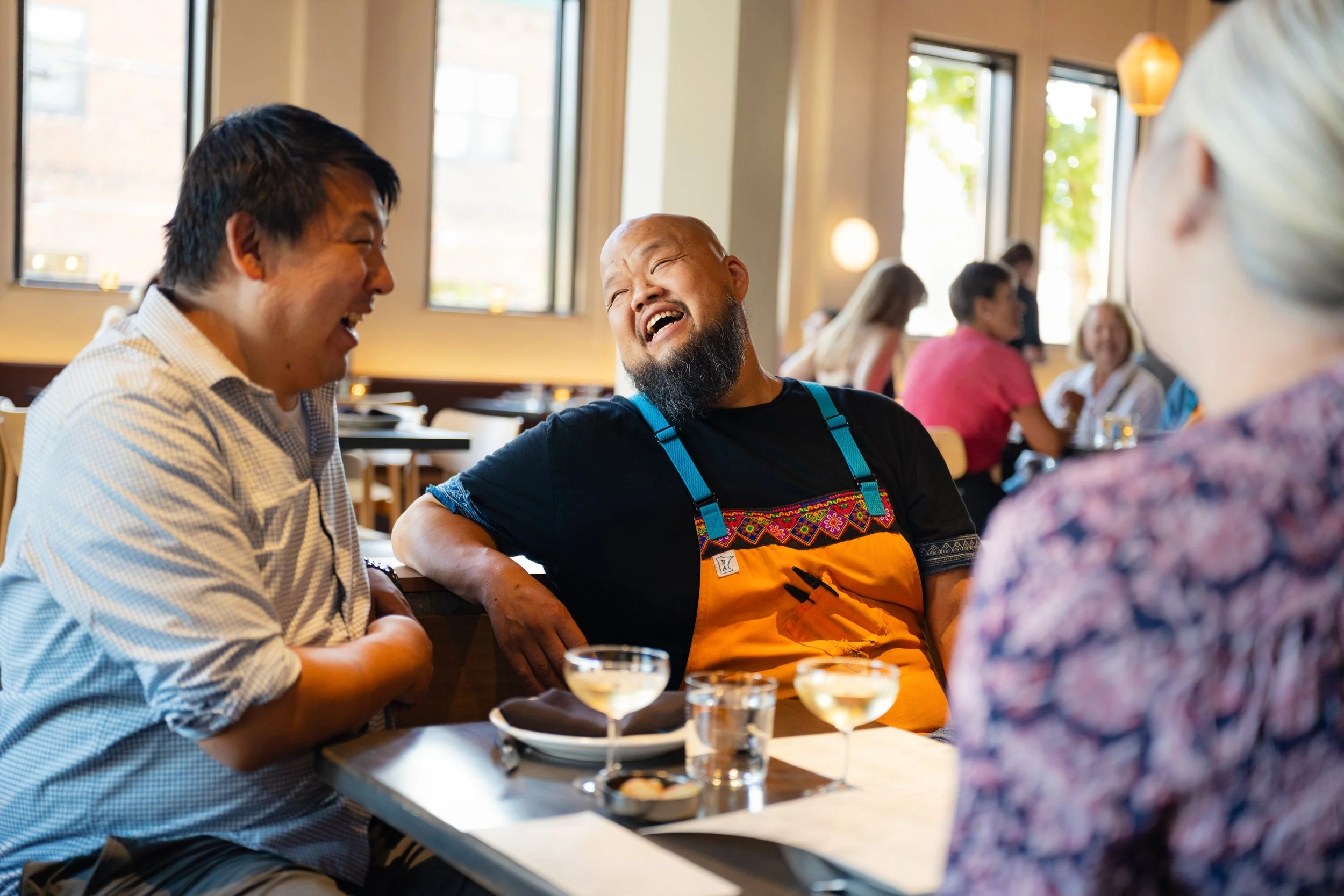
Here’s what this looks like in an actual scenario: I arrived at a location for a feature shoot at Diane’s Place for a New York Times restaurant feature. Before unpacking any lights, I walked the space and noted the muslin curtains. I turn off the pendant lighting near the front of the restaurant to see what the ambient daylight alone gives me. Next, I stand in several corners to observe how the natural light falls, noticing that the pastry cabinet closest to the window have the richest, most natural contrast. (If I had a bit more time on location, I’d likely have replace the bulbs in a couple of table lamps with smart bulbs to get a warmer look, and move one lamp to fill a shadowed pocket that felt a little dead on camera). Finally, I installed diffusion outside one of the windows to soften the late-morning glare and punched a hard source through it.
Once the room feels coherently lit, I invite Chef Diane Moua to take a seat — letting her move fluidly through the front space, rather than placing them in a precisely built pool of light. Each step is about responding to what the room offers before adding anything that contradicts its logic.

I've started thinking of this as environment-first lighting, though it's really what great cinematographers do instinctively and what commercial photographers often unlearn. I’m designing the light around the place, then letting the subject move through it as opposed to positioning the subject to work with our lights.
In practice, this is a series of small decisions. Replacing the practical bulbs in a location with controllable smart bulbs takes five minutes and transforms the quality of available light without introducing a visible production element. A beefy light source punched through diffusion outside a window reads like sky, supplementing what's plausibly there. A wall of negative fill duvetyne or curtains controls existing light spill and deepens shadows on the subject's face without bringing in any additional production elements. Environmental choices.
The harder version is when the location is actively working against you: overhead fluorescents at a different color temperature than everything else, a window pointed directly at your shooting axis, practicals placed with no logical relationship to where the subject needs to be. At that point, environment-first lighting is a production problem to solve before you can execute the approach.
My starting place in those situations is subtraction before addition. Before bringing anything new into a space, I look at what can be removed or muted: blocking a source that's creating a conflict, bouncing away from a wall instead of toward a subject, cutting ambient from one direction to isolate and strengthen the room's existing logic from another. The additions come after and are generally smaller than whatever I would have brought in starting from scratch.
On documentary-adjacent commercial work where the brief asks for "authentic" and "like they're in their real environment," the images will look different from controlled commercial lighting. If that's a surprise at delivery, it's a problem. The time to have that conversation is on the pre-production call, with reference examples, while there's still room to align. Showing a reference that explicitly demonstrates environment-first work and asking the client to respond to it (rather than showing a reference board of controlled commercial lighting and promising to approximate it) is the version of that conversation that works best.
Communicating like this gives my clients a way to understand and anticipate the visual differences before the shoot.
The Production Environment
The lighting version of this is mechanical enough to be taught. The production version is harder, and it matters more.
Shoots inevitably go astray with flat responses, technically correct footage that makes the viewer feel nothing. And the instinct is to troubleshoot the light, the direction, camera movement, or the framing.
Most of the time, when I track back through what actually happened, the problem existed before anyone rolled camera. The room was wrong before a single light went up.
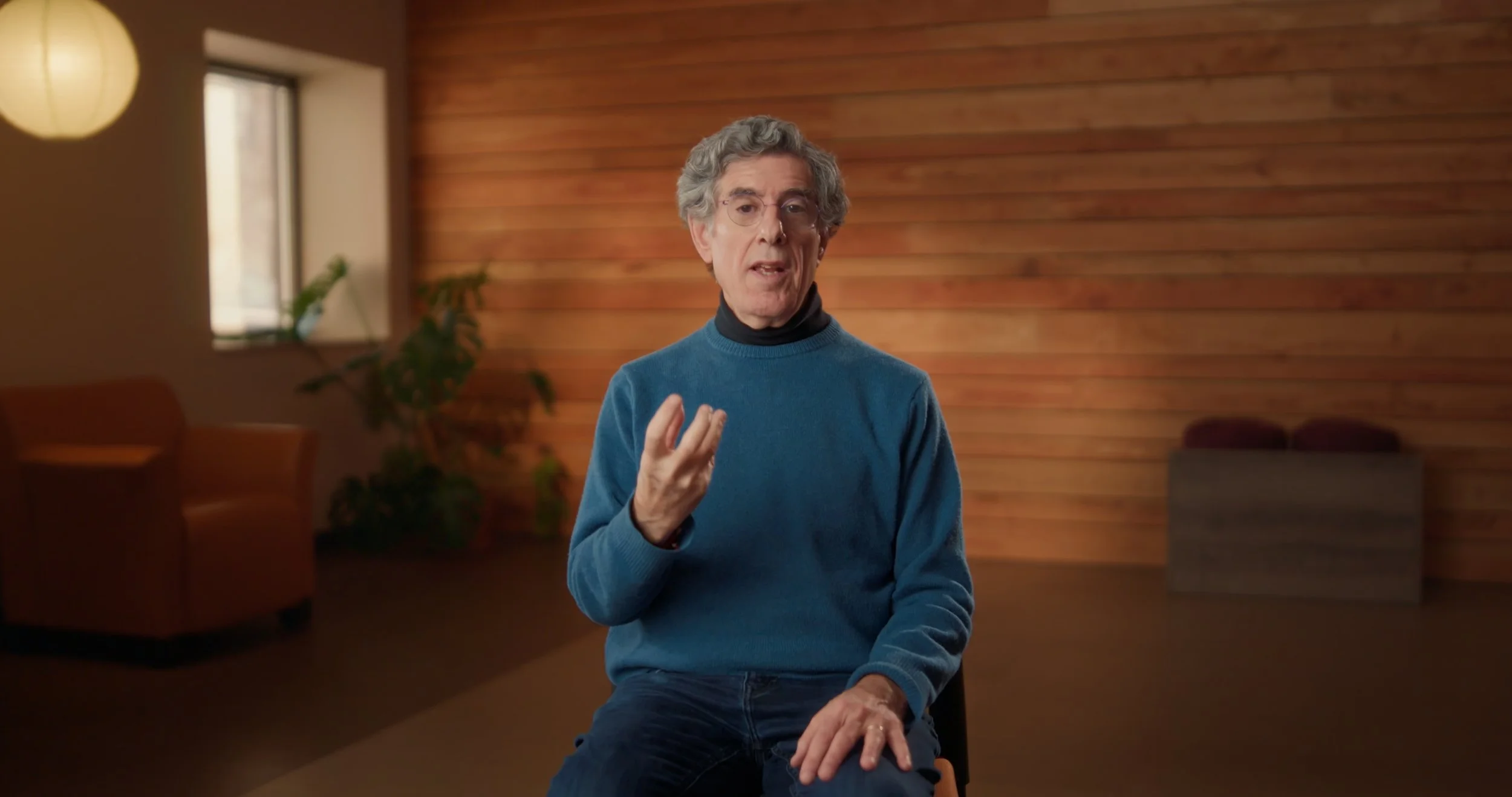
Who was in the space. What the schedule pressure felt like and whether the subject absorbed it before we started. Whether the subject had ten quiet minutes in the location before cameras rolled, or walked in mid-setup and got briefed while someone was still pulling cable. The energy of a full crew in a small office. A non-professional subject will hold it together until they glance past the lens and see eight people watching a monitor — and then they're someone else entirely. The stakeholder standing just off-camera, mindlessly checking their phone, yet needing this done before lunch.
These are environmental variables in exactly the same sense a light source is. They change what's available to capture, and they're harder to identify because nobody writes them on a call sheet.
What we’re actually designing at this level is the conditions under which authentic action comes through without being prompted. That's a producing decision. Most photographers don't see it as their job (they were hired to shoot, not manage the room's energy). The energy ends up in our creative results either way.
Some of this gets designed before the scout. The pre-shoot call with a non-professional subject is a super valuable tool that eliminates the first twenty minutes of a shoot day when the subject is still deciding whether to trust the process. Location selection that puts where the subject feels most themselves above where the light is marginally cleaner. Crew size calibrated to what the brief actually requires. There's a direct conflict between "authentic, documentary feel" and a location arrived at by eight people in two production vehicles, and that conflict needs to be resolved before the day, not managed through direction on it.
The pre-shoot call for non-professional subjects has become non-negotiable in my process, though what I actually use it for has shifted. The default use is logistical: confirming the location, running through wardrobe considerations, establishing who to call day-of. All of that still happens. But the call is also the first exchange in which the subject gets to hear how I think about the work and decide whether they trust it.
What I've started doing instead of walking through production details rapid fire is giving a brief version of why this specific story matters to me, said the way I'd say it to a peer rather than in terms of campaign objectives. The footage shows the difference. A character in their environment with the photographer they've been prepped to work with is one person. The same subject, same location, same lighting, with the brand stakeholder visible in their eyeline is someone else. Subjects who've had that version of the call show up differently on the day.
The Room You Work In
There's a third version of this, and it's the one most working photographers spend the least time designing deliberately.
It doesn't fit on a location scout. It's built out of calendar decisions, client agreements, physical workspace, and whatever personal or speculative work is or isn't running alongside the commercial load. The environment you've constructed for your own creative practice (designed on purpose or assembled by default) shapes the output as directly as any lighting decision does.
The question is the same at every scale: where's the energy going? The candle or the room? The answer shapes what kind of work is actually available to make.
The calendar as a designed environment
Shooting days stacked end-to-end, with no prep before them or space after, produce a specific kind of work. Technically solid, executed well, rarely surprising. What’s lacking is the mental bandwidth that gives us creatives room to make unexpected brilliant decisions in the moment. That state doesn't appear on command, and it doesn't survive a schedule with zero slack in it.
Designing the calendar means treating prep time and unstructured thinking time as productive inefficiency. The scout that runs ninety minutes over and gives you the perfect setup. The drives to and from locations where I let my subconscious keep running and process the edit I’m stuck on. Neither of those can take place without buffer in the system.
Client selection as environmental design
The clients I agree to work with aren't purely revenue decisions. I’m making agreements to operate under specific conditions for the length of the project, and those conditions stack up over time.
A client who extends genuine creative latitude and a client who needs sign-off on every frame create different, equally solid working environments. The question is whether I know, going in, which vibe I’ve agreed to work in — and whether that’s what I need in that creative season. Waiting until the work is far along is not a good environment for thinking clearly about what I’m actually agreeing to. The ones I've gotten wrong almost always happened when I said yes before asking that question.
Some clients are expanding my creative range. Others are narrowing it. Through the work they ask for, the speed at which they ask for it, the creative trust they do or don't extend. Both categories often pay comparable rates. But I don’t believe they produce the same photographer three years out.
The physical workspace
I'm not going to go to the mat for the efficacy of feng shui. But the space where the non-shooting work happens of editing, writing, pre-production, and the quieter thinking that leads to good shoot-day decisions, does communicate something to me every time I sit down in it. Whether what it communicates is serious work happens here or this is where I go to get through the pile matters a heck of a lot.
This isn't about expensive gear storage or some fancy Instagram feed-curated setup. Most photographers I know haven't made a proper decision at all. The workspace has become what it is.
One simple change of clearing one part of your desk or work area and setting it up for a single purpose such as editing, reviewing, or pre-production only can change that. Designating a specific physical space for a specific stage of the process makes your intention visible, even if the rest of the workspace stays the same. That first small step can begin to change how the environment supports the work.
Why does a photographer's internal environment matter to one of my clients or a production company I’m collaborating with? Because a creative practice designed by default results in default work. When you hire someone who actively designs their calendar, their inputs, and their mental bandwidth, you’re bringing an intentional, focused creative engine to your board.
Personal work as structured disruption
The spec ad, the personal story project in progress, the photography series without a client yet attached keep certain creative modes active that fully reactive commercial work doesn't always sustain on its own.
Musician Brian Eno used to arrive at recording sessions carrying a deck of cards called Oblique Strategies. Each card held a random instruction: a constraint, a contradiction, a non-sequitur directive. The function wasn't to be followed literally. The function was to disrupt a specific kind of stagnation that comes from expertise settling into habit, from too much practiced competence at a known problem. The personal project operates similarly. It keeps me in contact with questions that I don't have a solid answer for yet.
It doesn't necessarily add to the portfolio. It does change the photographer who makes the portfolio.
The Design Problem We Might Never Finish
Most photographers I know who feel stuck are working on their version of the candle. Developing the finest details of technique, nitpicking portfolios, or continuously updating social presences. All of it worthwhile. None of it our whole job.
I applied the environment-first principle to lighting years before I applied it to production, and to production before I applied it to the career.
The room is a design problem at every scale and gets the least attention at the scales where it matters most. The literal lighting environment gives me direct feedback in my frames when I’ve gotten it wrong. The production environment gives slower feedback: the flat footage, the subject who never quite settled, the client relationship that didn't develop past the invoice. The career environment gives us the slowest feedback of all, which is why most photographers leave it to chance.
Improving the candle is important. Moreso is improving the room. Don’t get it confused that they're equivalent choices that produce equivalent results.