Below the Waterline
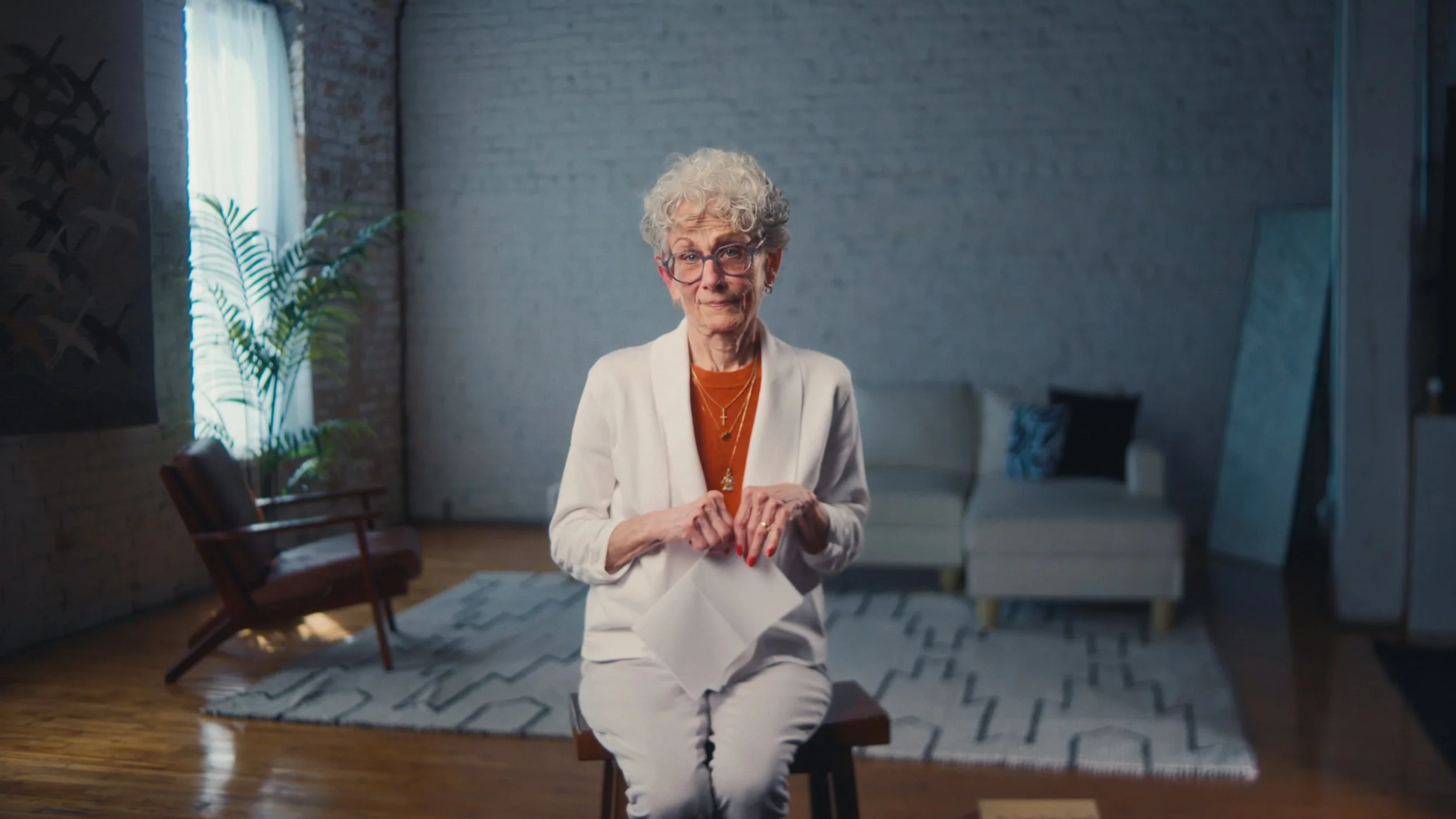
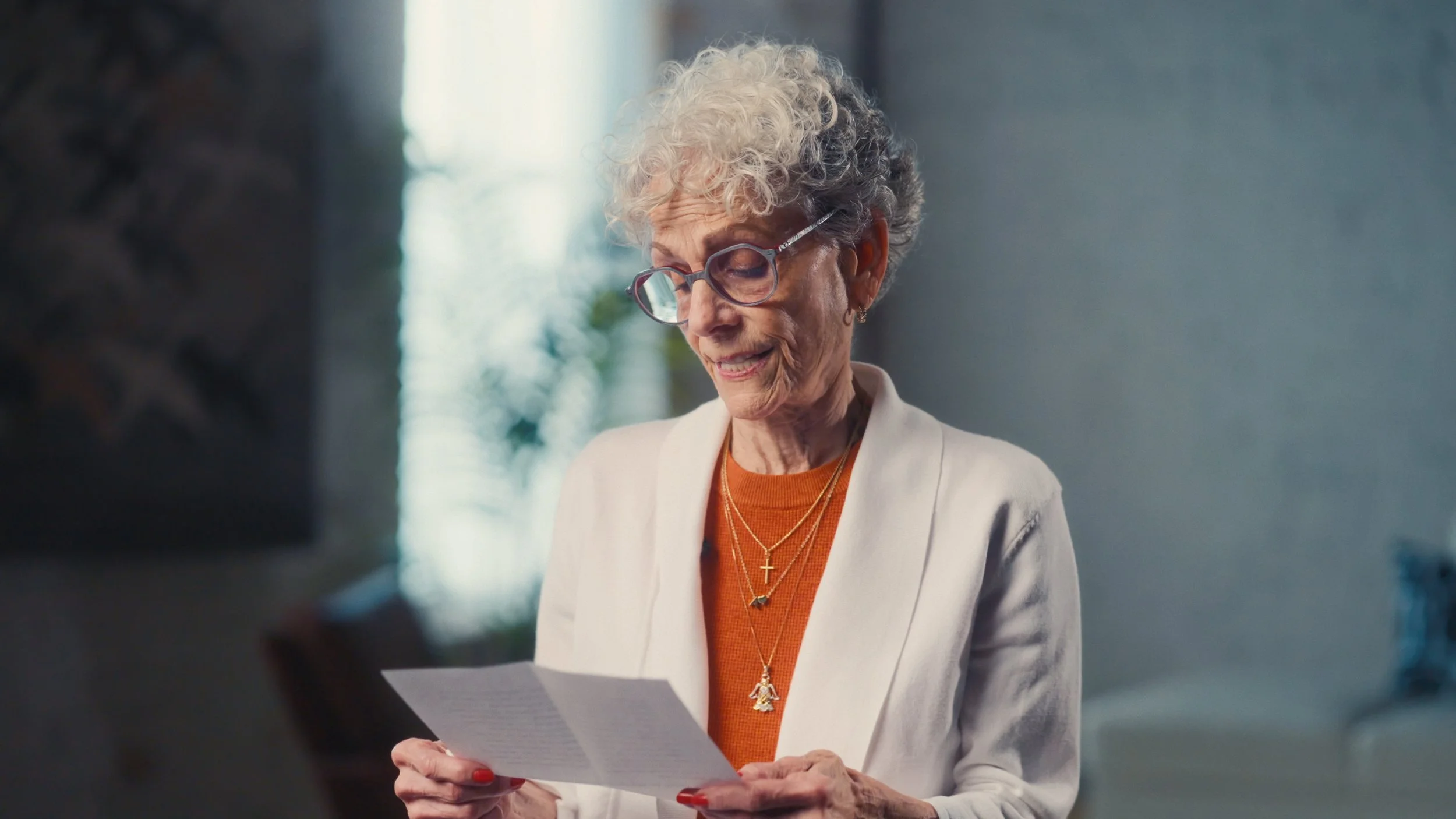
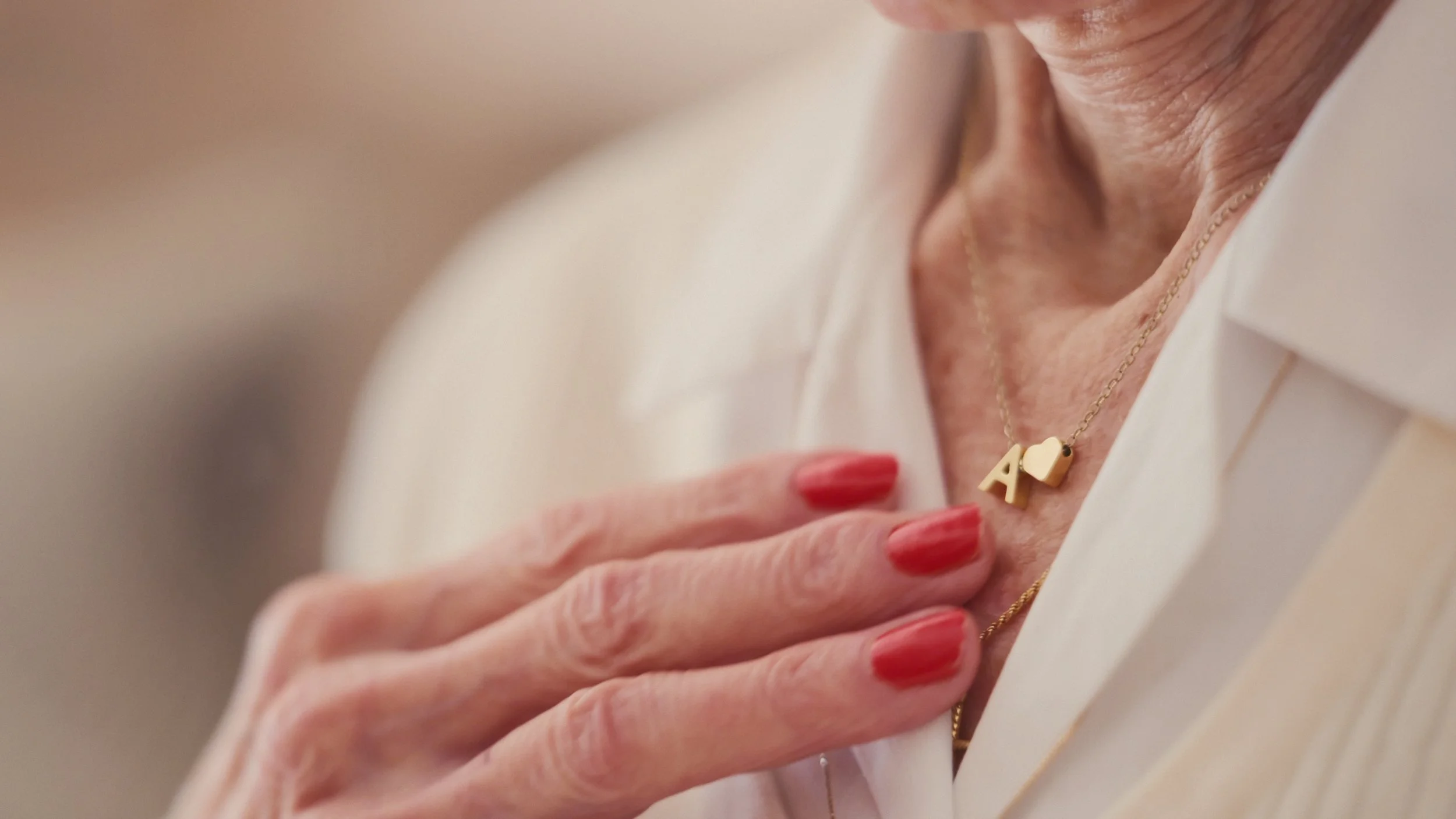
Anne unfolds a letter. She begins to read… “My dearest darling daughter.”
She pauses to maintain her composure and, looking directly into our camera and EyeDirect setup, starts reading it to Lynne, the daughter she already lost, and is speaking to and honoring through our video.
No one on the client or our production team wrote a word of it.
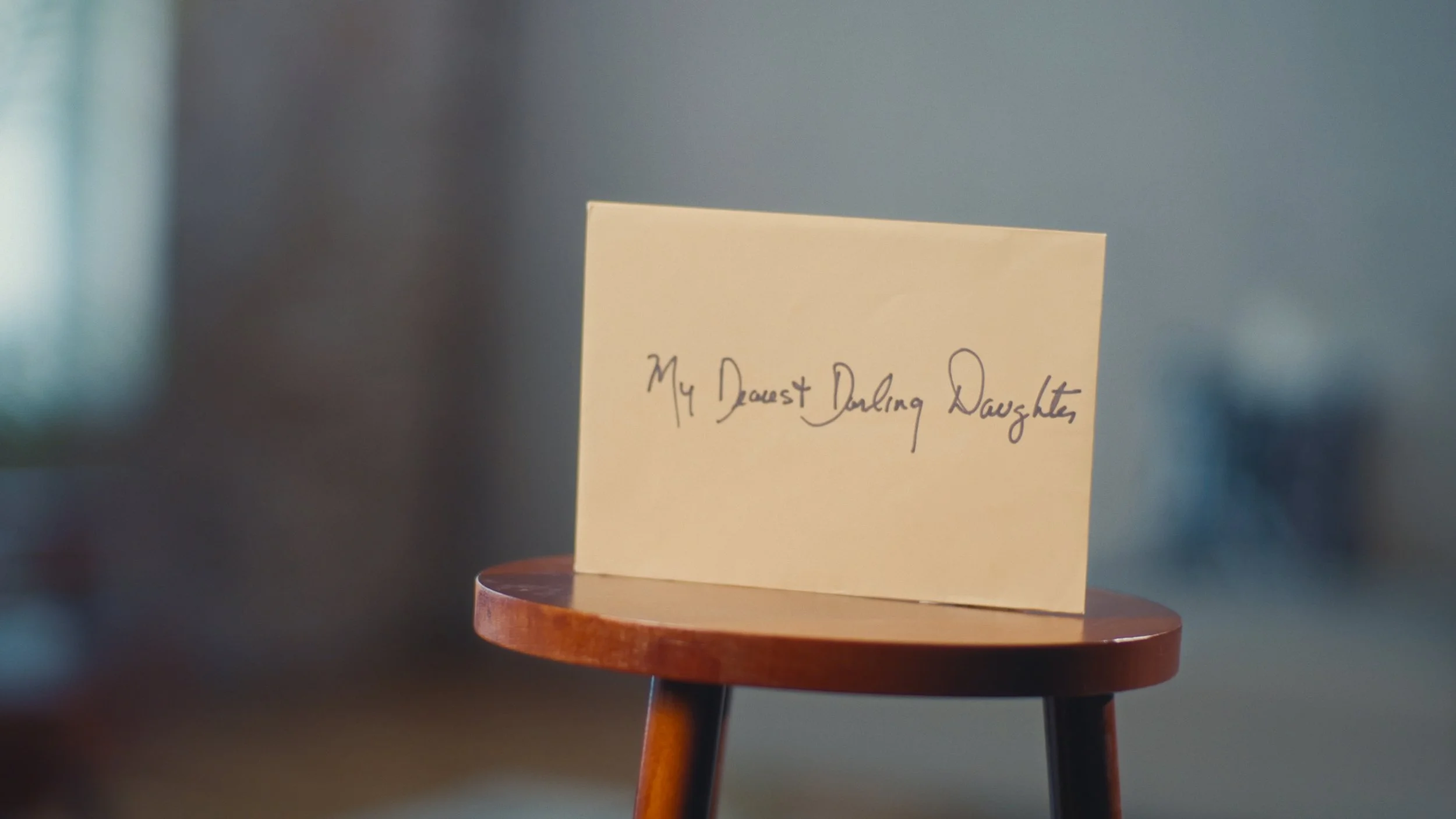
That’s the first thirty seconds or so of ‘Dear Lynne’, the hero story- and interview-driven video I directed and shot for the end-of-year gala for Guild Services, a Minneapolis nonprofit supporting people living with serious and persistent mental illness.
I’m back in pre-production on this year’s edition of the Ladder of Hope video campaign right now, which is exactly what sent me back through everything that made last year’s work so well. Getting there took months, at least a few creative dead ends along the way, and a moment where we nearly scrapped the film’s best idea as a throwaway device, rather than building the whole story around it.
WHAT WAS ASKED
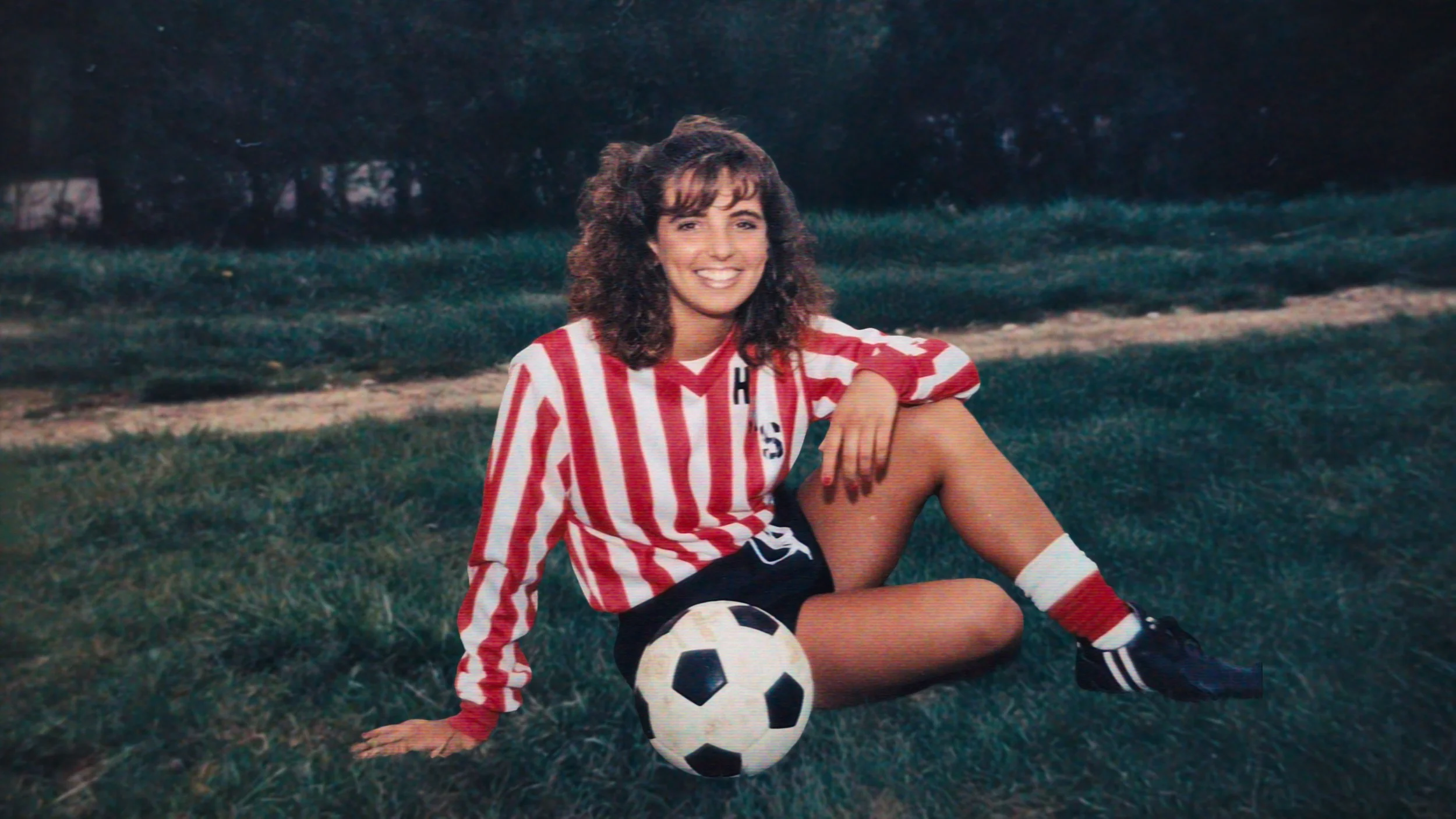
Guild Services is a client I’ve had the pleasure of collaborating with for a handful of years now and came to us with the story already identified of Anne and her daughter Lynne, who had died of natural causes earlier in that same year, but had received such strong and meaningful support from Guild during her adult life. The brief on paper was relatively straightforward for a nonprofit: A centerpiece video for the Ladder of Hope of one family’s journey to connect donors with the organization’s work and shorter versions to be used throughout the rest of the year.
What made it harder was that Lynne’s death wasn’t ostensibly part of the story we wanted to build towards or focus on directly. We were going to ask Anne to sit in front of our cameras and talk about her daughter and a loss that recent for an audience of donors at an event to ask them for donations. Knowing how sensitive and personal this would be, we made Anne’s comfort and agency our top priority throughout the process. Before filming, we spent several in-depth conversations with Anne, making sure she felt in control of her story and fully understood how her participation would be used. She had the option to pause, skip questions, or withdraw at any point, and we provided information about support resources during and after filming should she need them. If we got that tone or execution wrong, the entire piece could read as appearing exploitative of a family’s still-raw grief running through a fundraising ask.
Another aspect we needed to balance in the pre-production stages was how we stressed the individual’s story and the organization (and it's such a familiar trap to anyone who’s produced stories like these before). If we overdo the organization, then Anne is just a supporting character in a pitch. If we overdo the family’s story, then Guild’s actual role (and specific program areas) gets understated enough that donors will leave the room emotionally moved with no sense of what they’d really be funding.
IDEA INTO ARCHITECTURE
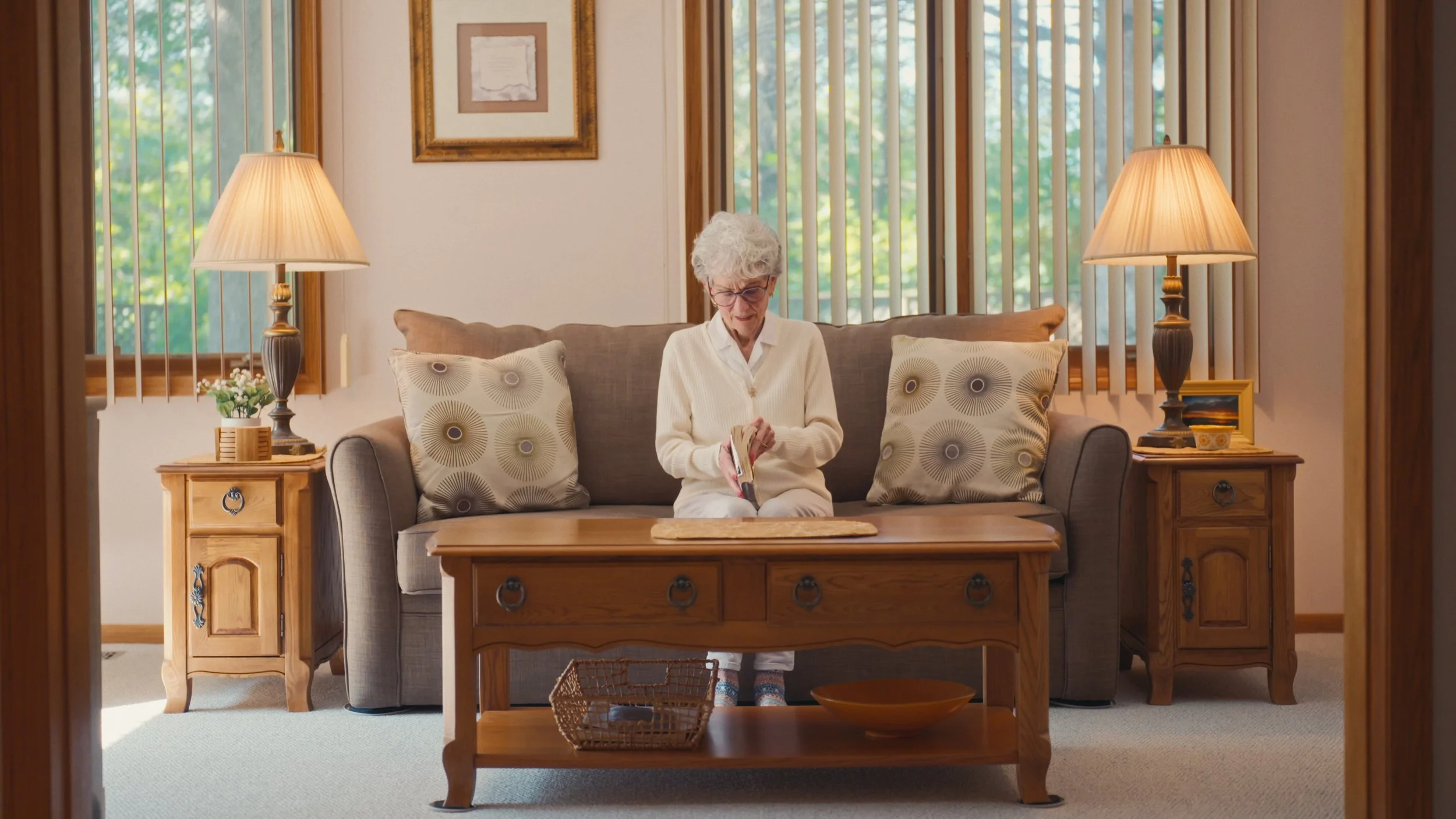
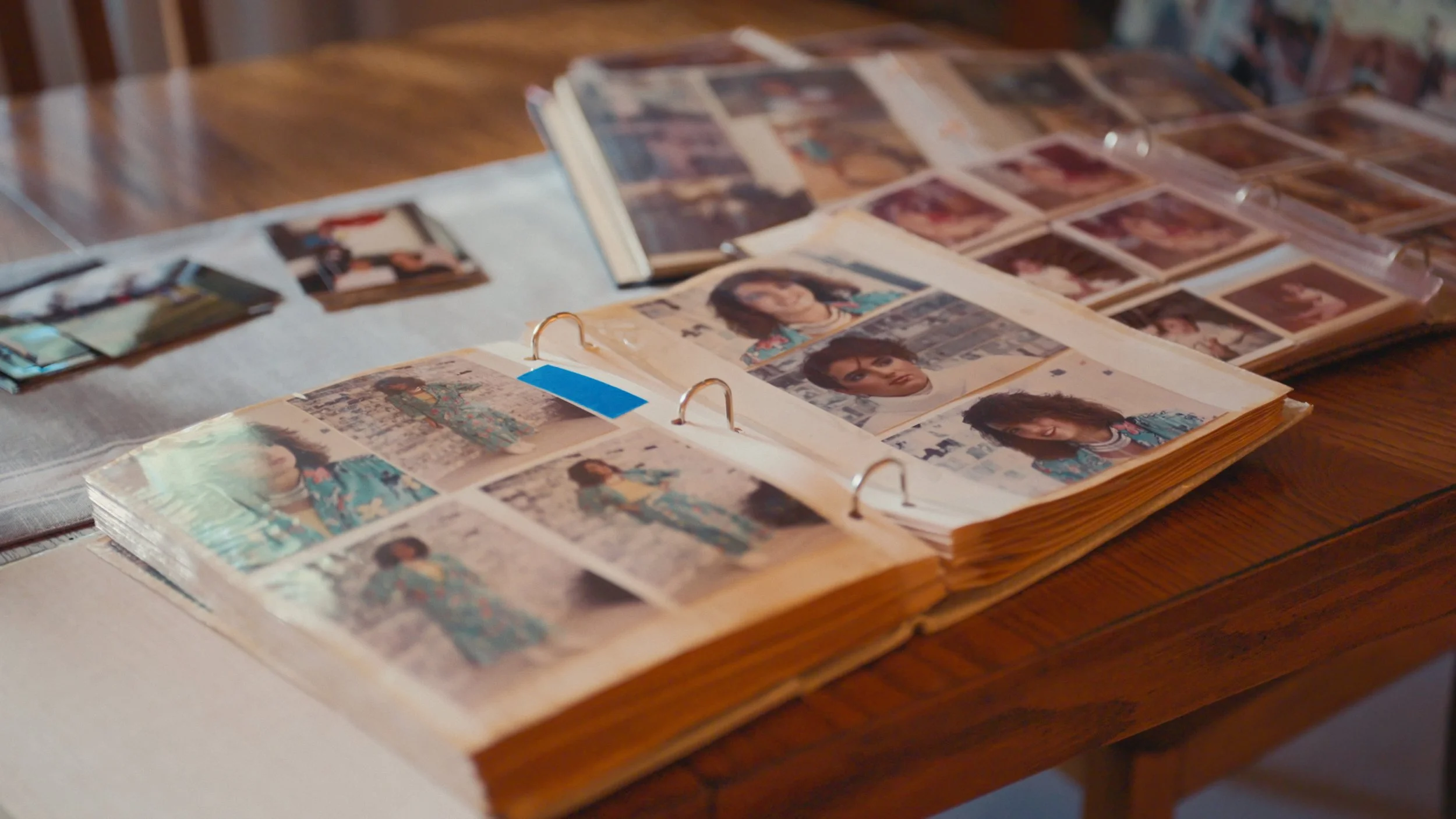
The way through came from noticing how Anne actually talked, well before we even had a filming location set. It wasn’t a “recounting” of Lynne’s life. She was speaking to her in the present tense, the way you’d talk about someone you still expected to see. After years in the photojournalism and documentary world, I’ve come to understand this as recent grief. It hasn’t had time to become a story yet.
So, we stopped thinking about this as Anne telling us about Lynne. We gave her the express permission to speak directly to her instead.
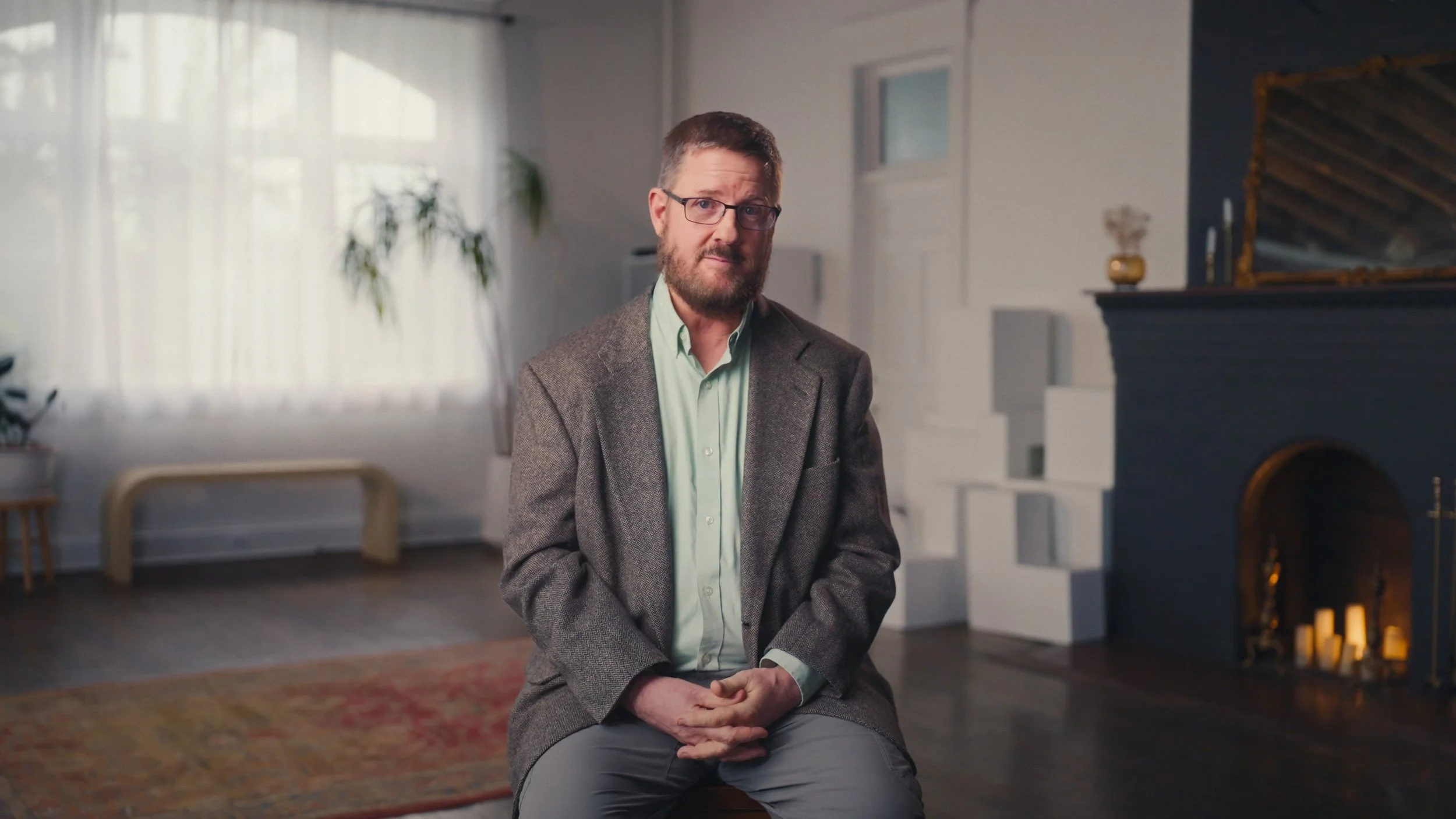
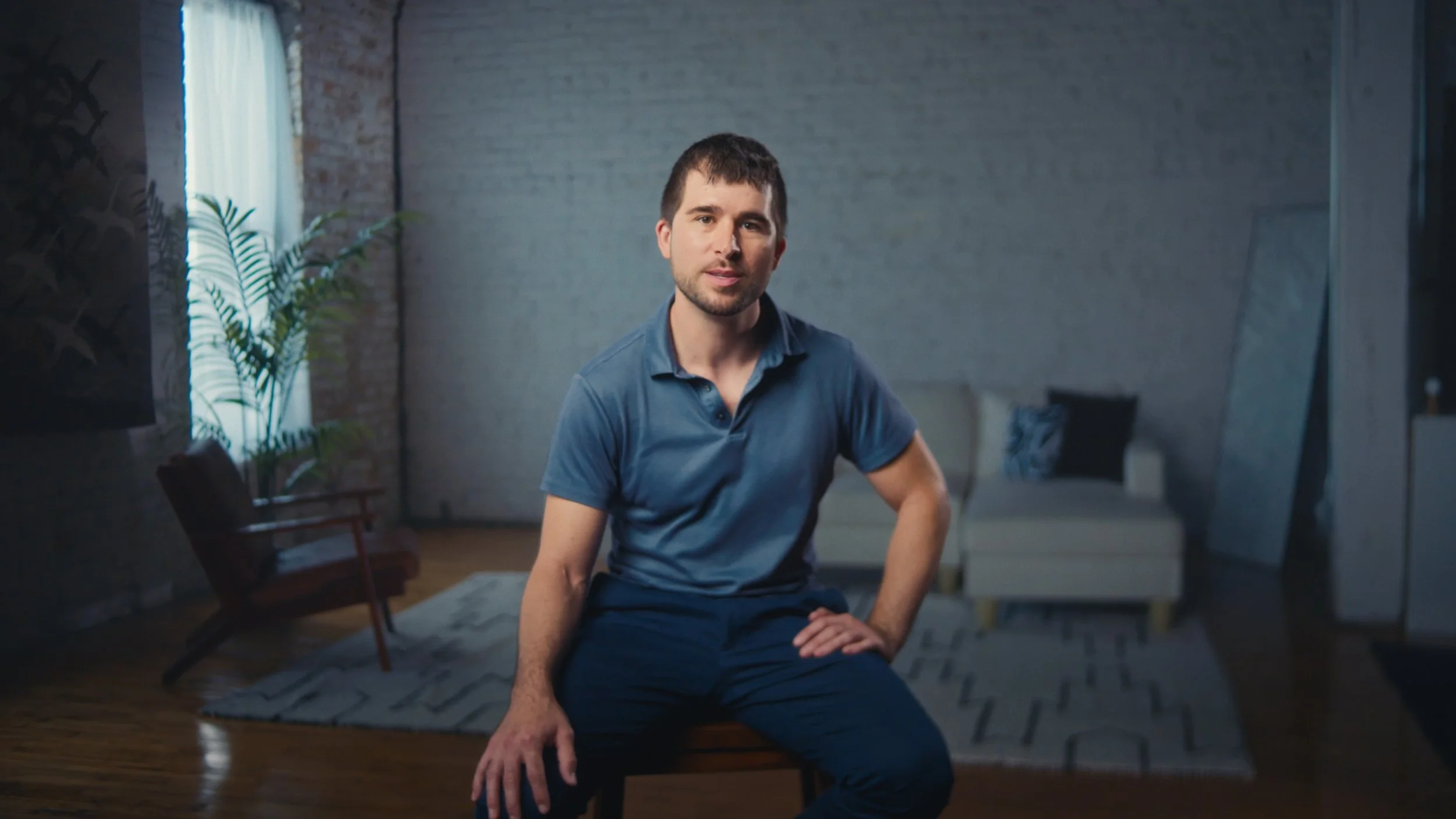
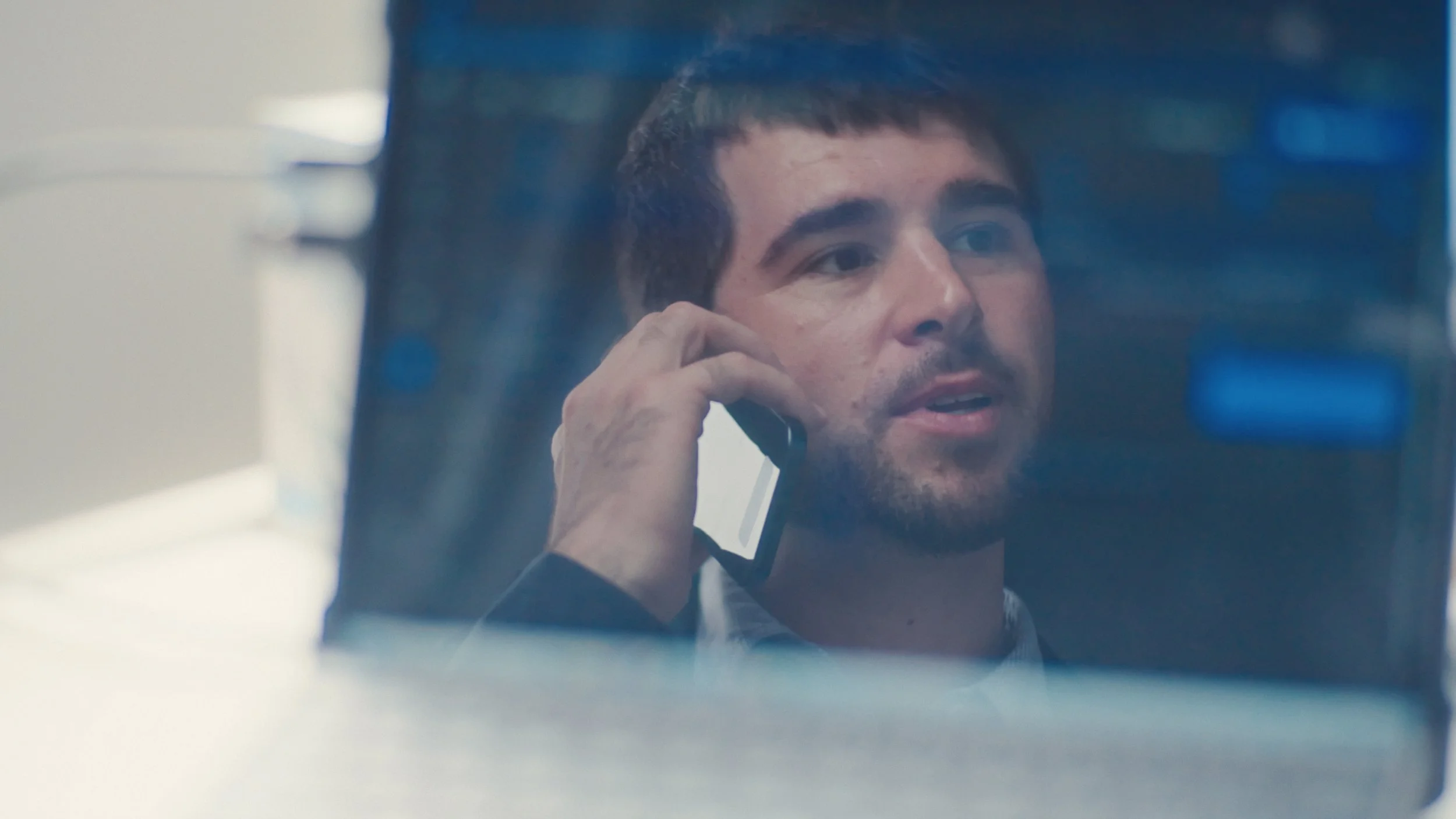
What came out of that mutually agreed-upon plan was a real letter, written by Anne herself before we rolled the camera, that wasn’t a voiceover narration in disguise or a ghostwritten script for her to perform. We didn’t write a single word of it; the letter’s power was dependent on being unmistakably hers. The letter became the film, with every section becoming a chapter where Anne opens a line, and the Guild representatives (Dr. Vuchetich from a clinical, psychological angle and Rob Burg from a case management and meeting people where they’re at angle) keep the thread.
Meeting Lynne –> The Emergence of Mental Illness –> Finding Guild –> Life Below the Waterline –> Loss –> Legacy
We wanted to keep a few rules in place based on that framework:
Keep a question alive in front of the audience at all times.
Bring Guild into the story later than one might expect, not just after her mental illness gets introduced.
And finally, nobody gets to be the hero. Guild doesn’t rescue; it accompanies and shows up for people as long as it takes.
The idea that held the whole film together came out of one of Anne's interviews: how much of mental illness (and truly, how much of our lives more generally) happens below the surface of what other people can see. It became a lens for the entire film immediately, which is where story and cinematography start informing each other.
THE WATERLINE
That metaphor extended well past her letter and became an integral part of our lighting plan, lens choice, and camera movement rules during our interviews.
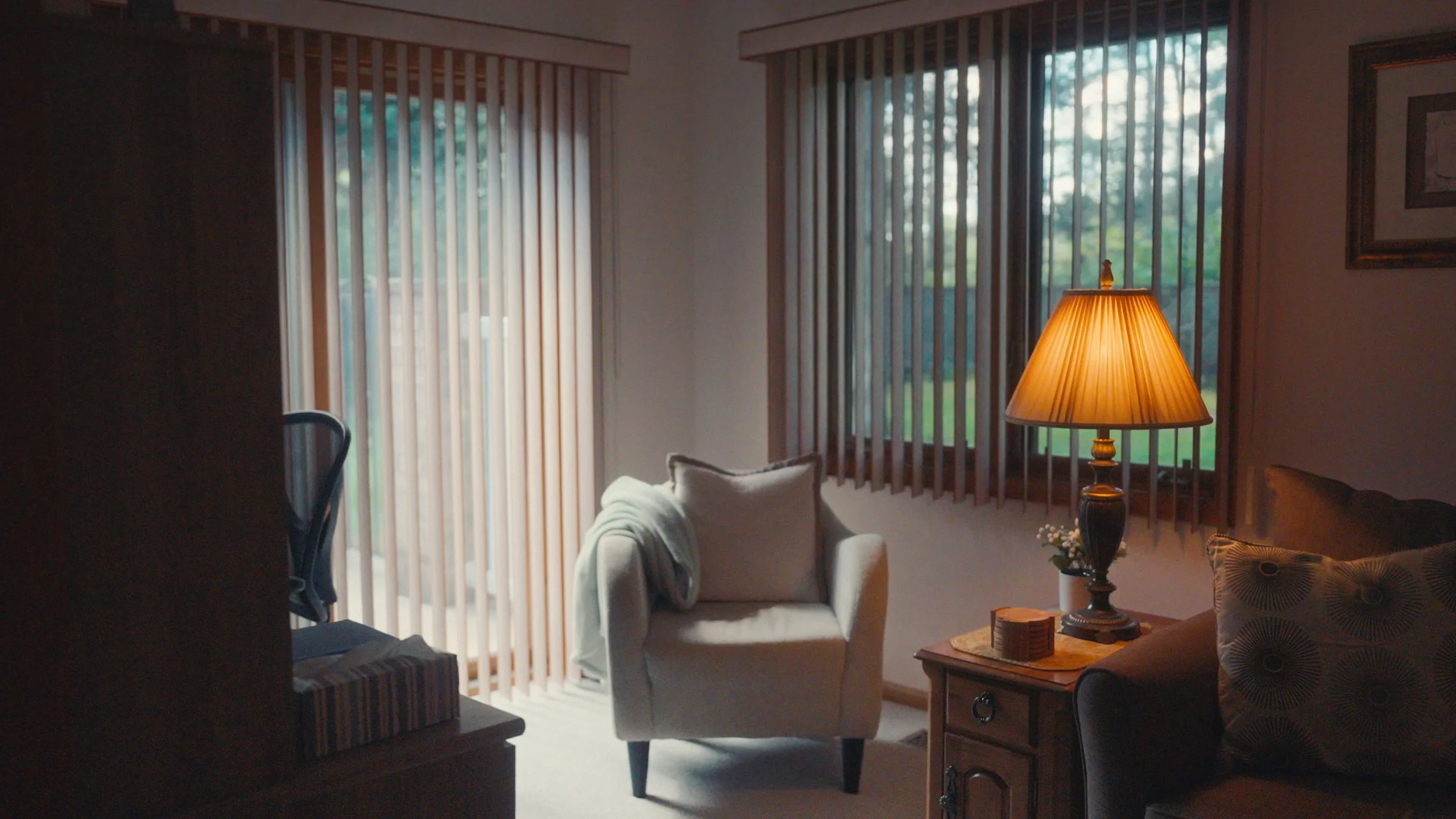
Just a few minor technical details for those fellow camera nerds out there. We operated with two FX6 bodies and vintage Leica R glass, carrying the interviews with Sony GM lenses in reserve for whatever the Leica set couldn’t cover. The reason for pairing the FX6 with vintage Leica R glass was to give the image a gentle, organic quality that felt less clinical and more personal, which suited the vulnerability of Anne's story. The vintage lenses introduced subtle imperfections and softness that helped draw viewers into a more human, lived-in visual space. Sony GM lenses stepped in when we needed that extra sharpness or coverage, but always as a complement to the main look. The primary angle was locked off using the EyeDirect, and a Dana Dolly provided the only camera movement, slow enough to sit below most viewers' conscious awareness. This fluid, almost imperceptible motion was important for reinforcing the theme of what lies beneath the surface, lending a quiet presence rather than distracting from Anne’s words.
Our lighting plan almost went another direction. My first instinct was to work closely with a gaffer to a DMX setup so our color/levels/contrast shifted dynamically with the letter itself and tracked to the emotional moments of Anne’s delivery. After thinking through the complexity/benefit (and candidly, working with non-professional talent, her comfort level with all of that), we cut that plan in favor of a large soft key with rich shadows and some color shift between the cool daylight coming in and Anne’s warm clothing and demeanor.
One exception was a faint water shimmer (600c + fresnel, bounced off a mirror in a water dish) along the back wall of the space that expressed her concept of the “below the waterline” metaphor at specific points in the piece.
(Just a quick thanks to the wonderful studios we worked with, Bloom Creativ and Studio Apparatus, who were gracious with their time, spaces, and flexibility to work with us. Definitely check those folks out if you’re looking for naturalistic environments here in the Twin Cities)
The next step in the production protected all of this from falling apart.
THE EDITS
The letter and the film’s real power depended entirely on staying entirely Anne’s. Protecting that authenticity took a rule directly into the edit instead of just good intentions — Never invent a line, never paraphrase, use only what’s in the transcript, and combine two adjacent thoughts from the same speaker when they were clearly reaching for a similar idea. There could have been “better dialogue” moments, but what we created was the strongest version of what Anne, Dr. V, and Rob actually said.
That process ran through an actual paper edit (Yes, I did print out the transcripts and marked up the whole damn thing. And yes, I know I’m old) with every usable quote pulled and timestamped, organized by theme as the real “writing” process. I’m a firm believer that a paper edit almost always yields a stronger, more cohesive story that drives a more organized set of visuals (or better yet, storyboarded in advance) in the finished piece.
Because we structured the comprehensive interview and letter approach from day one, it paid off in another way, as every question was designed so any single answer could stand alone thematically. I.e., the short-form cutdowns and campaign assets came out of the same footage readily.

THE CLOSE
While Ladder of Hope was ostensibly the primary deliverable output of the piece and the room at St. Paul RiverCentre was wrapped in the emotion of the video, my goal was equally to serve as a shepherd for Anne’s grief. There’s no resolution with a loss this recent. There was no Hallmark happy ending. My target was much further out for Anne herself, where she could, years from now, watch “Dear Lynne” again and see the tribute to her daughter and the assistance and support she received from Guild through struggle.
The impact was immediate, and several attendees shared afterward that they found themselves deeply moved in a way that felt both personal and reflective. Anne herself expressed gratitude that her letter had been preserved exactly as she wrote it, telling us afterward that she felt truly seen and honored by the portrayal. Guild’s leadership commented on how the authenticity of Anne’s story resonated with their community and donors, helping make the case for their work in the most human way. For me, those responses confirmed that real voices and emotion made the difference, served the campaign’s goals, and offered genuine connection to Anne and the Guild community.
I've spent two decades pointing a camera at things that matter — for nonprofits like Guild and Habitat for Humanity, with an editorial background through The New York Times and Bloomberg, and growing into lifestyle for brands that seek to bring timeless, genuine images to their audiences. That's what a photographer's eye is at the end of the day: not a trendy visual style, but the ability to find one frame at a time to tell a story people can’t help but connect with. ‘Dear Lynne’ is that instinct, applied to eight minutes instead of one image.