Buck the Orthodoxy
Virtually the entire photography world knows of ‘The Decisive Moment’.
Chances are you've either invoked it, argued against it, or felt it vindicated something you already believed about how serious work gets made.
There’s only one problem with that convenient and famous story:
Henri Cartier-Bresson didn't actually name it.
The phrase "decisive moment" came from the memoir of a 17th-century politically-scheming Jean François Paul de Gondi, Cardinal de Retz, and was lifted by an American publisher who wanted something punchier for the English version.
Cartier-Bresson signed off on it, and Matisse inked it on the cover design.
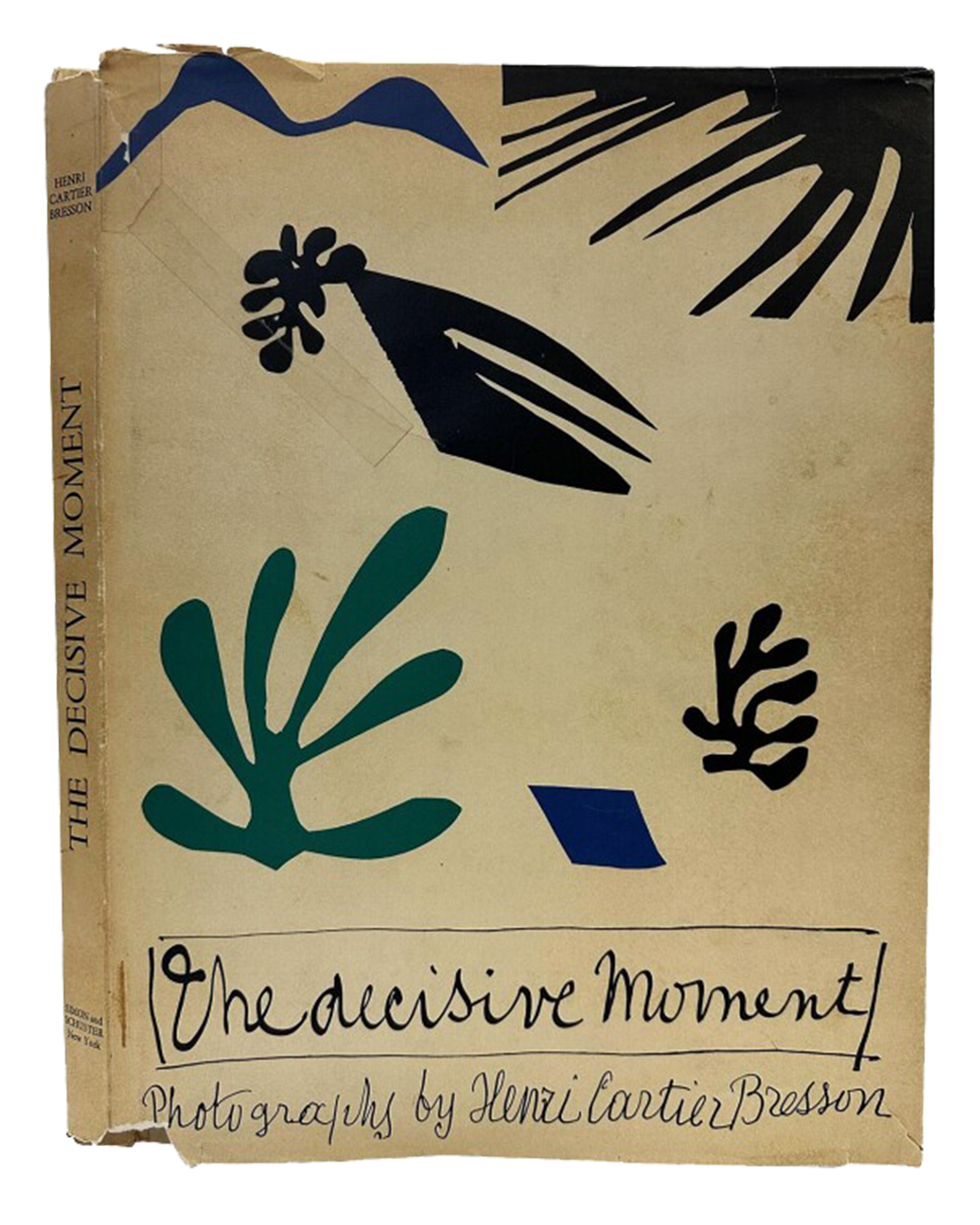
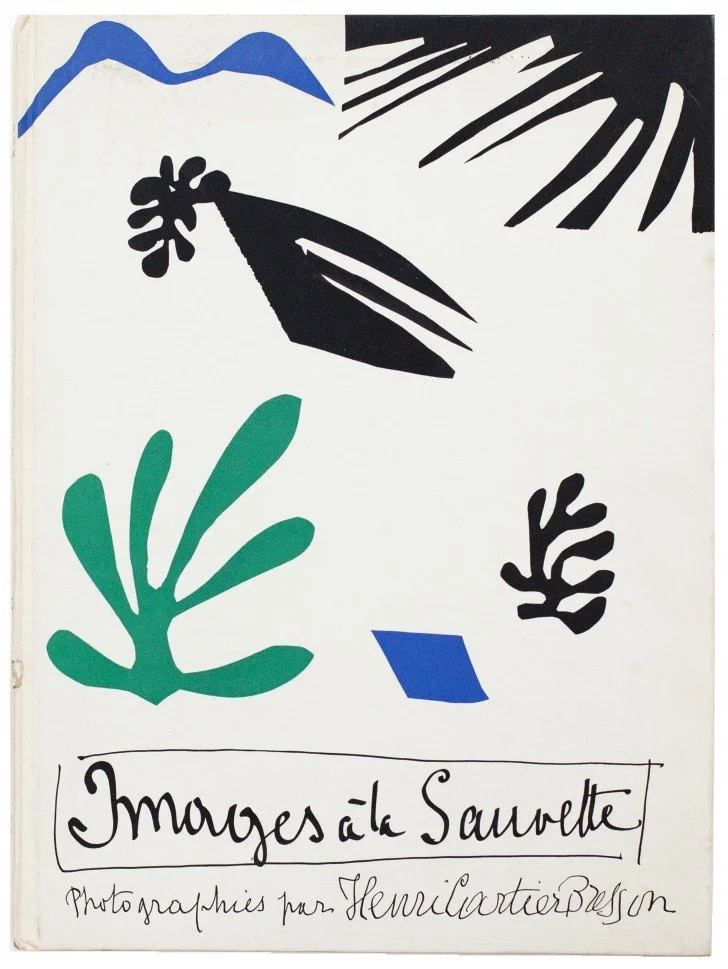
(His original title was “Images à la Sauvette,” something akin to ‘Images on the Run’)
The origin of the most influential, infinitely quoted “rule” in photography was a publisher's marketing decision built on a long-dead Cardinal's turn of phrase.
Right or wrong, it's a perfect illustration of how orthodoxies form. Someone describes their practice honestly. Someone else turns the description into a title. A generation reads the title as a law. And seventy years later, photographers are still defending or violating a commandment that the man never actually issued in a book where he explicitly argued against rigidly applying rules to composition in the moment.
What Orthodoxies Actually Are (And Why They Form)
That's what orthodoxy is. Not a lie, per se. I believe it’s a truth that worked for someone, somewhere, sometime, and subsequently ossified into a rule. Or more dangerously, a widely accepted truth.
The philosopher Thomas Kuhn had a useful frame for this, even if he was writing about science. Fields operate inside paradigms, shared sets of assumptions so deeply embedded that practitioners stop seeing them as assumptions at all. They feel like reality. The orthodoxy of a given moment is experienced as common sense, which is precisely what makes it hard to see and harder to question. They collapse when enough anomalies that the prevailing framework can't explain, and the whole structure stops being useful.
Creative industries manufacture orthodoxies faster than most, because ambiguity is uncomfortable and certainty is contagious.
You need a niche.
Shoot tethered.
Editorial is dying.
Don't shoot tethered.
Build your audience before you build your work.
Build your work before you build your audience.
The problem isn't that these rules exist. The problem is that nobody remembers who made them or why. And nobody's asking whether the conditions that made them useful still apply. Or whether it's just what people do.
The Trap of the Alternative
The lazy response to orthodoxy is reflexive inversion; if everyone zigs, zag. That's just signing up for a different orthodoxy with a cooler jacket.
The word heterodox is everywhere right now, and it’s really starting to wear thin in my opinion. Contrarianism has become its own orthodoxy, replete with just as much order and dogma as the status quo they claim to be reactionary towards. The people loudest about refusing to follow the rules end up clustering into their own bubbles of identity, following each other into sameness.
The photographer who's all in on [pick your cliché 2026 orthodoxy of choice] and whose opinion on every creative question follows mechanically from that dogma is not a serious person.
If I know one thing about how you work (your camera system, your aesthetic, your client list, your rate) and from that single data point, I can accurately map everything else about your creative practice, you probably aren’t thinking for yourself much. You've taken an entire suite of positions wholesale from a group, and the group handed them back pre-assembled.
One of my favorite counter-examples in the photo world worth digging into is William Eggleston. He shot color in 1976 when color was deemed commercial and unserious (black and white was the language of fine art photography, end of story).
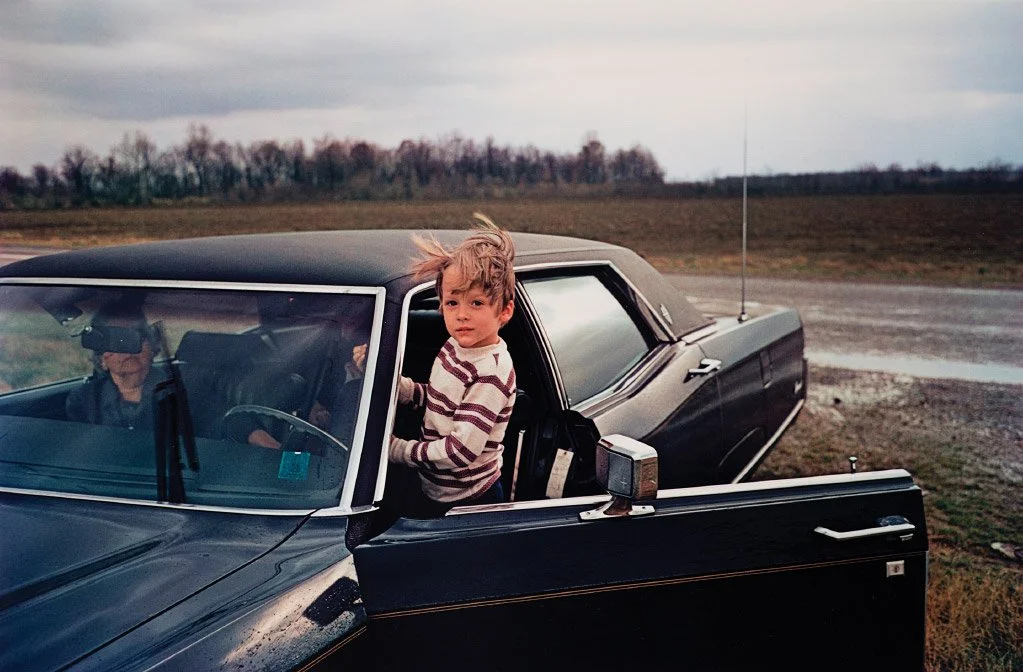
William Eggleston, Untitled, 1970-73, dye transfer print, collection of the Wilson Centre for Photography, ©The William Eggleston Trust
However, when Eggleston shot color, he chose it because color was where the truth was for him. The New York Times called his MoMA show "perfectly banal, perfectly boring." Here's what made his perspective different from posturing: you couldn't predict him from that single data point. His approach to color didn't tell you his subject matter. His subject matter didn't tell you his relationship to the market writ large. He was rebelling against the obvious, genuinely parsing through a personal creative problem that only he could see.
The film revival is probably the most visible example of this in photography right now. Shooting film in 2026 is, for many practitioners, an aesthetic signal to communicate seriousness to a peer group. It is not a considered position about what the format makes possible or impossible. Eggleston shot color because color was where the truth was for him and his creative output. Most people shooting film now are shooting it because of what it says about them, without regard for what it does for the work.
The Social Cost Is Real
Here's what nobody that puts 'think for yourself' content on the internet tells you: it costs something.
Getting personal here for a moment…
If you’ve been following my work here for the last handful of years, you’ve likely seen me operating across editorial and dipping my toes into commercial simultaneously and deliberately. From this decision, I’m sure both sides have misread me at different moments.
Some agency producers or art directors may see over a decade of editorial work and assume I can’t produce to a shot list, come up with a unique creative look, or match an existing deck.
Some photo editors see brand or commercial work in the portfolio and recalibrate what category I belong in.
[Don’t even get me started on the flak I took early on choosing deliberately to produce work across stills and motion equally]
Fight it as I may, our industry wants legibility: pick a lane, stay in it, be uncomplicated to explain, hire, and coast along with the orthodoxy of specialization.
To those creatives going through your own questioning: Water finds its level.
Eggleston's prints sold for $5.9 million at Christie's in 2012. The critic who called them boring had long since stopped writing about photography. But before we ink a fairy tale about persistence, I view the shift in the value of his work and culture largely as an anecdote about time horizons.
As much as it pains me to say, the market is slower than our anxiety and faster than our impatience. But regardless of our optimistic timelines, it tends to find the truth.
The work is always in motion.
Stop Confusing Scale of Impact for Scale of Enterprise
Somewhere in the last decade, the creator economy decided that reach was the maximal unit of measure that mattered. It's the water we're swimming in: growth metrics as legitimacy. The MrBeast model of volume, frequency, algorithm optimization, and reach as proof of relevance has become the orthodox framework, so dominant that creators who operate outside it are increasingly asked to justify the choice, as though intentionally lean is a failure state rather than a position.
Followers, agency size, output volume — these are enterprise metrics. They're legitimate, they're measurable, and they say remarkably little about whether anything you made actually mattered.
Here's what I mean. A photograph that runs in a national publication and reaches the right person on the right day does something almost impossible to quantify and almost impossible to replicate with volume. It arrives in a specific context, with editorial trust behind it, inside a reading experience where the viewer has already agreed to pay attention. It found them when they were looking for it, and it was trustable, and that combination is what makes it stick.
That's a different instrument from content. The mistake is treating them the same, as though a photograph that reaches a million people in a three-second scroll and a photograph that one editor puts in front of the right reader at the right moment are competing on the same terms. They're solving different problems for different reasons, and measuring both with the same ruler is how we end up barking up the wrong tree entirely.

Pricing Is a Creative Decision
The orthodoxy says pricing is math: know your costs, know the market, add a margin. That's one way to do it. It's also a way to communicate that you're interchangeable accidentally.
The biggest lie out there that gets passed along to younger photographers is that underpricing is humility.
Here’s what it actually means: it's a lie you tell a client about what the work is worth, and they believe you.
When you quote a rate that doesn't reflect what you actually bring, you're training the market to expect less from people like you, and you're making it harder for every creative behind you to hold a real rate. The race to the bottom is a collective action problem, and every photographer or DP who participates in it is a co-author of the conditions they complain about.
Everything Is Hitched
John Muir wrote that when you try to pick out anything by itself, you find it hitched to everything else in the universe. He was writing about California wilderness: pull a flower, and you're disturbing root systems, water tables, the behavior of insects you haven't noticed yet. The same is true of creative decisions, and probably truer than most of us want to sit with.
The orthodoxy wants you to believe your decisions are isolable. Just the gear choice. Just the rate. Just the aesthetic. Evaluate each one on its own terms, optimize it, move on. But they compound.
Your equipment shapes your overhead. Your pricing shapes what clients find you. Your clients shape what work you make. Your work shapes which editors call. The cycle rolls on.
It's also why auditing an orthodoxy means asking what else moves with it. What does your choice of photo or video kit communicate to a subject before you've made a frame? What does your business model say about what you're willing to make? What does your aesthetic tell an editor before they've looked at a single image?
Those are the actual questions of deliberate practice. The orthodoxy relieves you of them, which is a significant part of its appeal.
But, pull the thread of one creative decision, and you’ll find you’re holding more of your life and career in your hand than you expected.
What Deliberate Dissent Actually Looks Like
I'm not arguing for permanent rebellion. Rebellion is its own orthodoxy, and we've established that.
What I'm arguing for is permanent interrogation: the habit of asking, before you reflexively do and believe what your group does — is this true, or is this just what people do? That question will regularly make your work move more slowly, less automatically at times. It will occasionally make you harder to categorize, which carries its own costs, both reputationally and often financially.
But here's the honest version from where I'm sitting: I've interrogated some of the orthodoxies in my own creative practice, making conscious choices about which common practices to stick with and which orthodoxies to buck. I'm almost certainly still inside others I haven't seen yet.
Cartier-Bresson wanted to call it “images on the run”. I still believe it’s the most accurate description of how work worth making gets made:
In motion.
Before the rules catch up.
While something genuine is still available to be caught.